AI-Powered Strategy: Insights from Case Studies
How AI transformed strategy at major firms—case studies in marketing, finance, and supply chain with practical frameworks and data governance lessons.

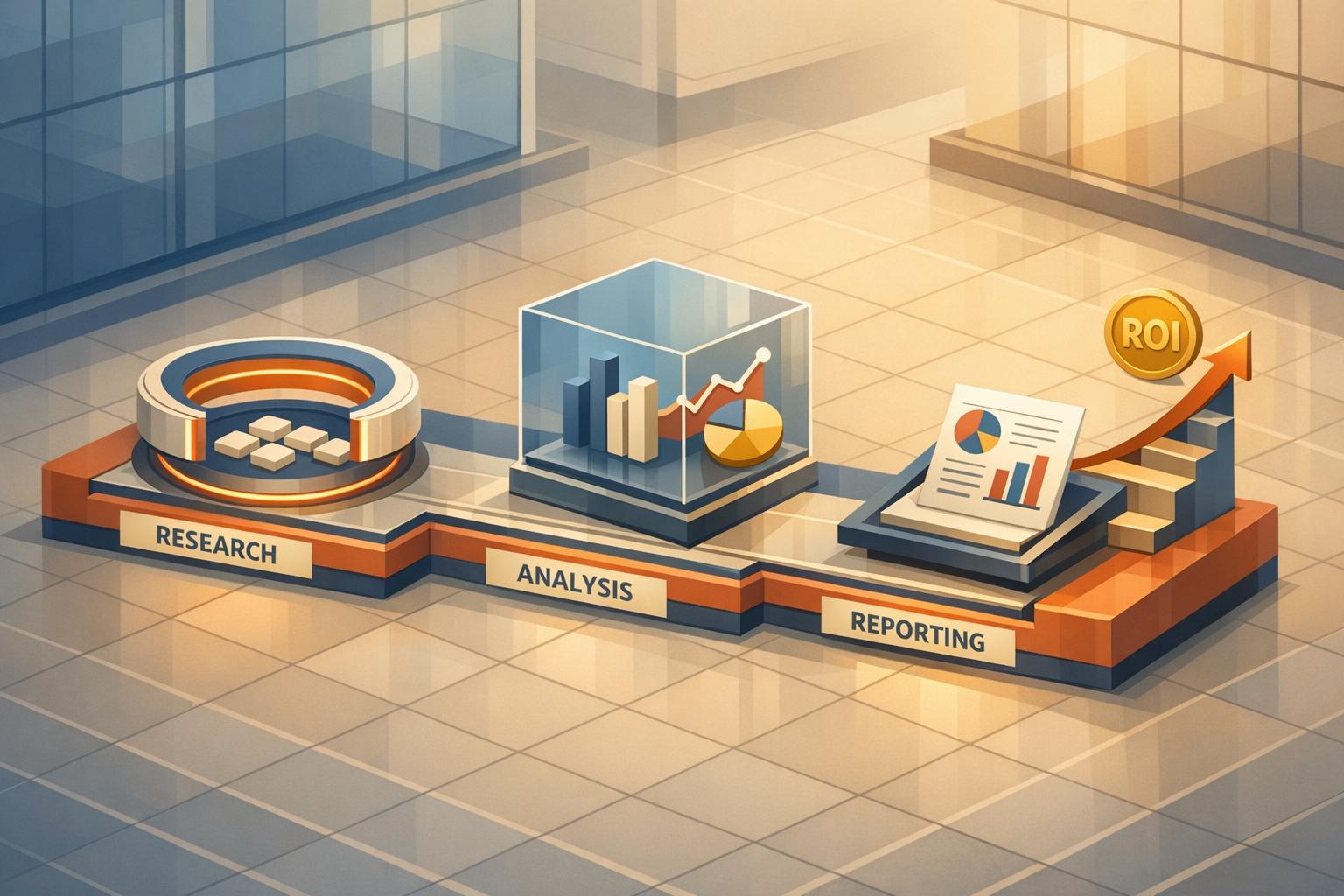
AI is reshaping decision-making in business, turning weeks of analysis into minutes. Companies like Coca-Cola, JP Morgan, and Amazon are already leveraging AI to solve complex challenges:
Coca-Cola uses AI to analyze consumer trends in real time, speeding up marketing decisions.
JP Morgan integrates AI for financial forecasting, breaking down data silos and improving efficiency by 40–60%.
Amazon employs AI for demand forecasting, optimizing supply chains, and reducing costs.
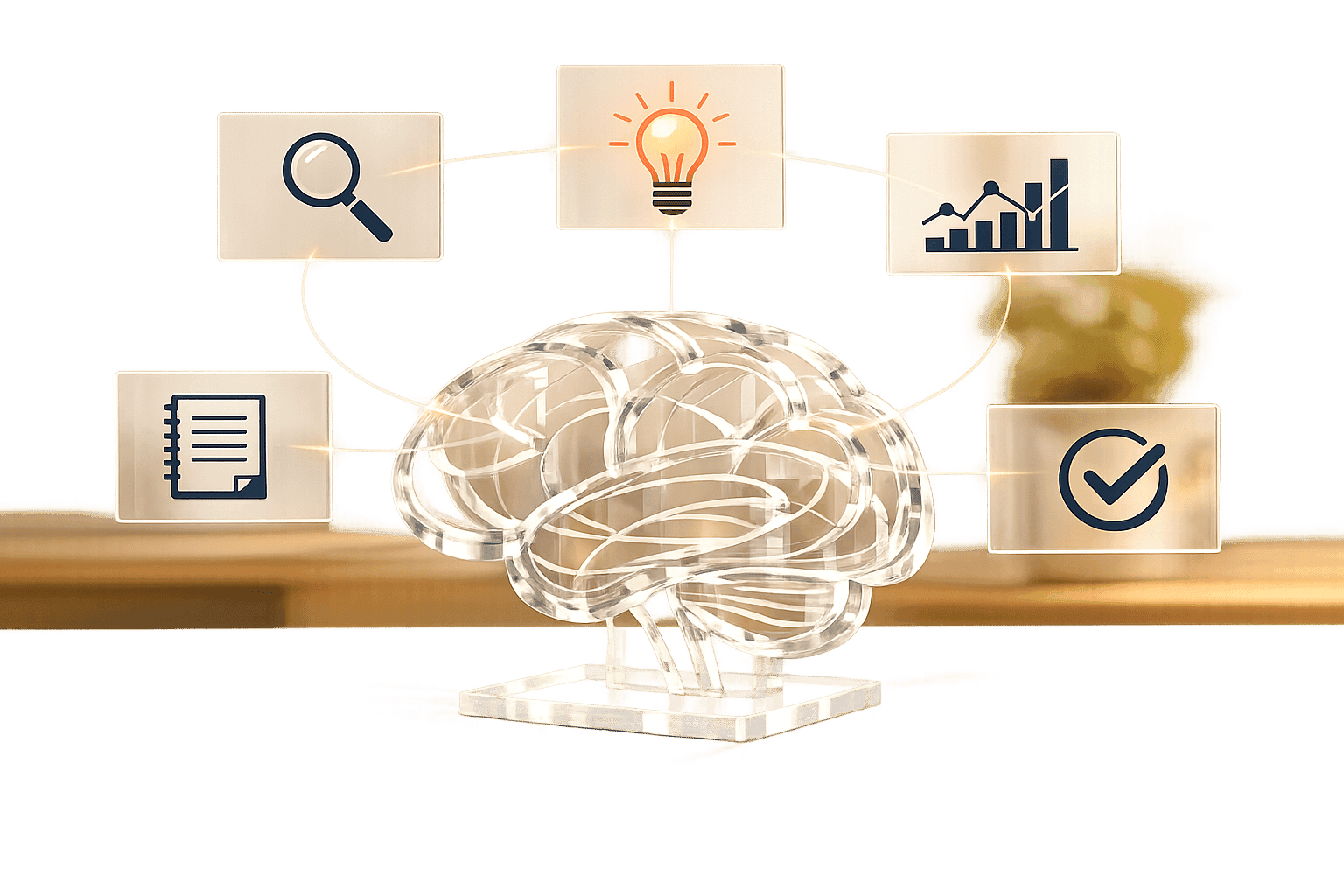
These examples show how AI enhances traditional tools like SWOT analysis and Porter's Five Forces, making them faster and more actionable. By focusing on clear goals and strong data management, businesses can use AI to improve efficiency and stay competitive. Platforms like StratEngineAI simplify this process by offering natural language insights and established frameworks.
Case Study 1: Coca-Cola's AI-Driven Marketing Strategy
Marketing Strategy Challenges
Coca-Cola found itself grappling with a tough reality: consumer preferences were shifting faster than their traditional marketing cycles could handle. While it often took weeks or even months to plan campaigns, consumer trends were evolving in just days. To keep up, Coca-Cola needed to dive into a mountain of data - everything from social media chatter to point-of-sale transactions - to uncover real-time insights about their audience.
The problem? Processing all that data manually just wasn’t feasible. Marketing teams were bogged down by the complexity of juggling multiple data sources, including inputs from finance, demand planning, trade, R&D, and sales. These delays not only slowed decision-making but also meant missed opportunities to connect with consumers at the right moment. Clearly, it was time for a game-changing approach.
AI Solutions and Implementation
Coca-Cola turned to AI-powered assistants to tackle the challenge. These tools were designed to process and synthesize massive amounts of data, providing actionable insights in real time. The company adopted a cross-functional approach, bringing together teams from marketing, finance, demand planning, trade, R&D, and sales. This collaborative model ensured that AI-driven recommendations were shared seamlessly - and directly - on executives' mobile devices.
Infosys highlighted the simplicity of this solution:
"The easy-to-use tool can be utilized to develop strategic briefs that will inform broad-level discussions and overall corporate strategy"[2].
Results and Lessons
The results were immediate and impactful. Coca-Cola’s ability to align its strategy with fast-changing market trends became a core strength. Thanks to AI, food and beverage leaders could access research, insights, and even corrective recommendations on their mobile devices within minutes[2]. This automation freed up marketing teams to focus on what they do best: creativity. It also meant campaigns could be adjusted quickly to reflect emerging trends, ensuring Coca-Cola stayed ahead in a competitive market.
Coca-Cola’s experience underscores how AI can transform decision-making, helping businesses respond to consumer needs with speed and precision.
Case Study 2: JP Morgan's Financial Strategy Transformation

Tackling Financial Strategy Challenges
JP Morgan encountered a significant roadblock: essential insights were trapped within data silos, accessible only to specialized analysts[1]. To tackle this, the bank's leadership collaborated with AI experts to identify tasks that consumed excessive time and resources[3]. This targeted effort revealed opportunities where AI could step in to handle repetitive tasks, freeing up analysts to focus on more strategic, high-value work. These challenges laid the groundwork for a major shift in how JP Morgan approached forecasting and planning.
AI-Driven Solutions for Risk Management and Strategic Planning
Overcoming these hurdles required not just new technology but also a shift in mindset.
JP Morgan introduced predictive analytics to revolutionize its market forecasting. This allowed the bank to identify trends months ahead of human analysts, improving its ability to predict demand and workforce requirements. The bank also integrated generative AI and large language models (LLMs) to automate the creation of strategy documents by pulling from diverse data sources. This enabled executives to simulate hundreds of scenarios in just one night[4]. Rather than replacing human decision-making, the technology acted as a collaborative "thought partner", enhancing the judgment of its users.
Results and Key Takeaways
The adoption of AI brought impressive results, boosting efficiency by 40–60%[4]. It allowed JP Morgan to detect trends earlier, strengthen its risk management processes, and speed up strategic analysis. One critical takeaway is that AI delivers the best results when organizations focus on solving specific operational problems instead of adopting technology just for the sake of innovation. By addressing issues like data silos and sluggish scenario planning, JP Morgan ensured its AI investments generated real strategic value. Other financial institutions can learn from this by engaging internal advocates, targeting impactful use cases, and leveraging AI to complement human expertise.
Case Study 3: Amazon's AI-Optimized Supply Chain Strategy
Global Supply Chain Challenges
Amazon, like many large-scale operations, faced mounting pressures as customer demand surged and global supply costs climbed. Managing inventory for hundreds of millions of products while keeping delivery times short and costs under control was no small feat. The company realized that traditional, reactive supply chain models simply couldn’t keep up with the speed and scale its customers had come to expect. To stay ahead, Amazon needed a way to predict what customers wanted - before they even asked for it [5].
Real-Time Demand Forecasting with AI
Amazon turned to predictive analytics to tackle these challenges head-on. Using AI, the company began forecasting demand for over 400 million products, particularly during high-traffic shopping seasons [5]. This wasn't just about crunching numbers; Amazon also integrated AI into its recommendation engine, which now drives 35% of its sales. By analyzing customer behavior, the system helps ensure the right products are in the right place at the right time [5].
On the logistics side, AI-powered dynamic route planning allowed Amazon to make real-time adjustments to delivery routes, boosting efficiency. But it wasn’t all about automation - Amazon also prioritized employee training. By equipping its workforce with the skills needed to handle complex decisions, the company ensured that human judgment remained a key part of its operations [5].
Impact on Operations
The results spoke for themselves. AI-driven strategies helped Amazon cut inventory costs, speed up delivery times, and improve customer satisfaction [5]. By shifting from a reactive model to one that anticipates demand, Amazon showed how vital high-quality data and continuous employee training are to success. Rather than over-automating, Amazon struck a balance, combining cutting-edge technology with human oversight to create a supply chain that’s as efficient as it is adaptable [5].
Ai Strategy For Business Leaders: Real World Case Studies + Actionable Frameworks
Lessons and Frameworks for AI-Driven Strategy
AI Impact on Business Performance: Before vs After Adoption Metrics
Common Success Factors
Looking at examples like Coca-Cola's marketing transformation, JP Morgan's revamped risk management, and Amazon's streamlined supply chain, one thing stands out: the importance of strong data governance. These companies created a universal semantic layer to define key metrics, ensuring AI models worked with secure and well-managed data. By building on these foundations, AI doesn’t just complement traditional frameworks - it speeds them up and makes them smarter.
Using AI with Established Frameworks
AI doesn’t replace classic strategic tools like SWOT, Porter's Five Forces, or Blue Ocean Strategy - it enhances them. Take customizing SWOT with AI, for instance: AI can sift through mountains of market reports, competitor data, and customer reviews to uncover insights you might otherwise miss. Similarly, with Porter's Five Forces, AI-driven tools can track supplier pricing trends, spot new competitors, and monitor substitute products in real time. This transforms what was once a static analysis into a constantly updated, dynamic view.
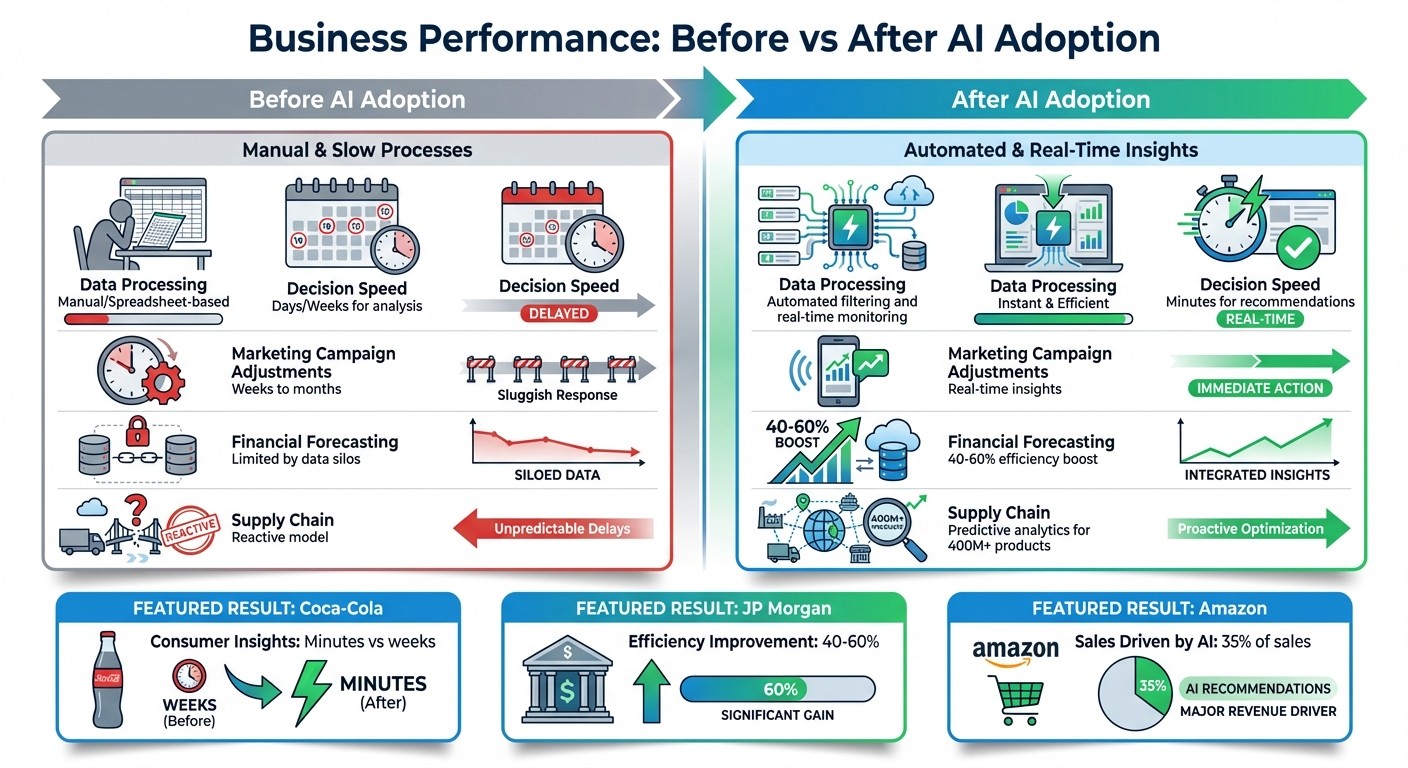
By embedding AI into the tools that leaders use daily, these frameworks become not only easier to use but also far more actionable. The result? Sharper strategies and measurable improvements, as demonstrated below.
Before and After AI Adoption Metrics
The metrics below highlight the shift AI brings, echoing the results seen in the case studies. Tasks like data processing move from tedious, manual spreadsheet work to automated systems that monitor in real time. Decision-making, which once took days or even weeks, now happens in mere minutes [2][6].
Identifying which metrics to prioritize is crucial. As Dmytro Ivanov, ML Engineer at Trinetix, puts it:
"Despite holding significant possibilities, the adoption of AI and machine learning inevitably involves trading off between latency, cost, and efficiency. At Trinetix, we strategically navigate these trade-offs for each unique case" [6].
The challenge lies in pinpointing the metrics that matter most for your strategy and tailoring AI solutions to meet those needs effectively.
Conclusion
Key Takeaways for Executives and Consultants
The examples of Coca-Cola, JP Morgan, and Amazon highlight one undeniable truth: AI doesn’t eliminate the need for strategic thinking - it strengthens it. By combining AI with strong data governance and clearly defined goals, these companies achieved more than just automation. They used AI to handle time-consuming data processing, enabling their teams to focus on interpreting results and driving execution. What once took weeks of manual effort is now accomplished in minutes, offering a sharp edge in fast-moving markets.
This transformation presents both a challenge and an opportunity. Executives who embed AI into their strategic planning now can position their organizations for better performance and sharper competitive advantage. The starting point? Identifying the metrics that truly matter to your business and aligning AI solutions to support those priorities.
The Role of Platforms Like StratEngineAI
AI platforms like StratEngineAI take these lessons a step further by simplifying and accelerating the strategic planning process. Instead of spending weeks gathering market research, analyzing competitors, and applying frameworks, these platforms condense the timeline to mere minutes - all while maintaining depth and accuracy. Using over 20 established frameworks like SWOT and Porter’s Five Forces, StratEngineAI helps craft comprehensive strategic narratives from start to finish.
What’s more, these platforms prioritize usability. Rather than overwhelming users with complex dashboards, they provide insights through natural language interactions. Executives can ask questions and receive instant, context-rich answers, enabling quicker decisions without sacrificing quality - just as the case studies demonstrated on a larger scale.
FAQs
How does AI improve tools like SWOT analysis for strategic planning?
AI takes SWOT analysis to the next level by swiftly processing internal data and scanning external market trends to deliver insightful, data-backed evaluations of strengths, weaknesses, opportunities, and threats. This approach not only speeds up the process but also minimizes human bias, resulting in a more precise and impartial analysis.
With AI, businesses can spot patterns and uncover opportunities that might slip through the cracks during manual evaluation. This means decision-makers can dedicate their energy to developing strategies rather than getting bogged down in time-consuming research and analysis.
What are the key factors for successfully using AI in business strategy?
Integrating AI into a business strategy isn't just about adopting the latest technology - it requires a thoughtful, strategic approach. To start, it's important to align AI initiatives with specific business goals. This ensures that efforts are focused on achieving measurable results rather than wasting resources on unclear objectives.
A solid data foundation is another key factor. High-quality, well-organized, and easily accessible data is essential for generating accurate insights and avoiding biases. Equally important is investing in talent and skills. Teams need a mix of expertise, including data science, industry knowledge, and the ability to interpret and act on AI-driven insights.
Moreover, executive support and collaboration across departments play a critical role. This helps secure necessary resources, keeps teams aligned, and ensures AI integrates seamlessly into existing workflows. Starting with small pilot projects and clear metrics for success is a smart way to test the waters. These pilots allow businesses to fine-tune their approach, scale what works, and achieve meaningful outcomes.
By embedding AI into decision-making and building support from stakeholders, companies can transform this technology into a powerful tool for long-term success.
What steps can businesses take to manage data effectively for AI-driven insights?
Effective data management lays the groundwork for trustworthy AI-driven insights. To get started, businesses need a solid data governance framework. This framework should clearly define who owns the data, set quality benchmarks, and establish robust security policies. By centralizing both structured and unstructured data into a unified, cloud-based repository, companies can ensure consistency in processes like cleaning, enrichment, and labeling - steps that are critical for minimizing bias and boosting the accuracy of AI models.
Automating tasks such as data cataloging and metadata tagging can save time and help teams quickly find the datasets they need. Regular audits and validation checks are equally important to maintain data accuracy and ensure everything stays current. Breaking down silos is another key step - connecting systems through APIs and adding a semantic layer allows AI tools to analyze a complete, unified view of the business. Tools like StratEngineAI simplify this process by merging data ingestion, market analysis, and actionable insights into one AI-powered platform. This gives executives the clarity and speed they need to make smarter, more confident decisions.