
Generate Framework builds a framework analysis, not a strategy. You get the framework applied to your company, such as a SWOT or a Porter’s Five Forces, which is a useful foundation for a strategy. To get a full strategy with a recommended direction, generate a strategy brief from the result, or start in Strategy Builder.
Which frameworks you can run depends on your plan. Free includes 4 frameworks, Essential includes 13, and Professional includes all 29. Pay-as-you-go accounts can run every framework and pay per run. Frameworks outside your plan show an Upgrade button instead of Select. See Strategy plans and pricing.
Run a framework
The page is titled Framework Generation and walks you through three steps, shown at the top as Framework, Context and Generate. You can click an earlier step to go back. You can only move forward once a framework is selected.1
Open Generate Framework
In the side menu, under Quick Frameworks, click Generate Framework.If you already had a framework open, the page skips to the Context step with that framework’s inputs filled in. To start fresh, click New Project at the top of the page.
2
Pick a framework
Under Select Framework, frameworks are grouped into four categories: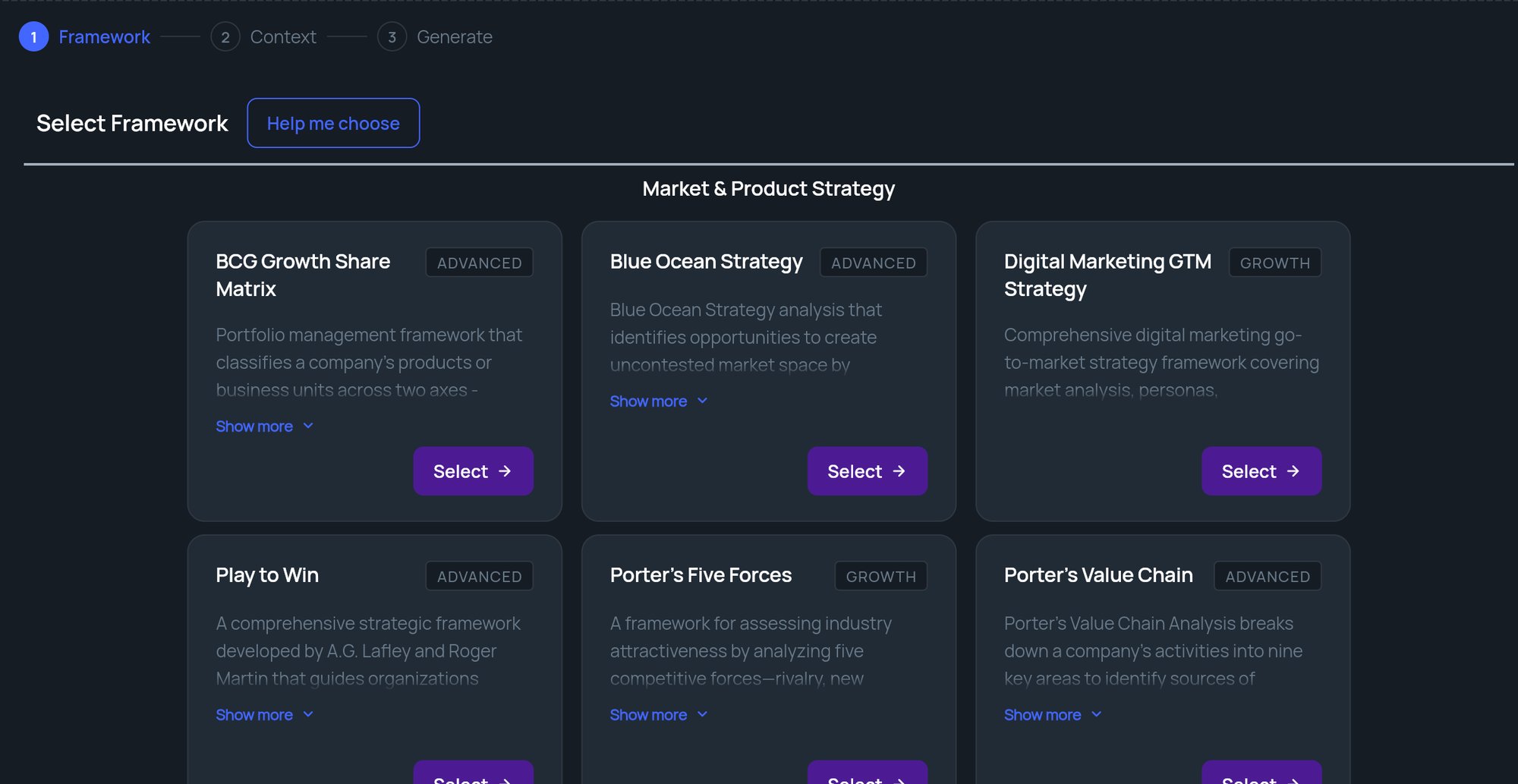
- Market & Product Strategy
- Positioning & Strategic Analysis
- Organizational & Change Management
- Financial & Performance Analysis
3
Describe the business
The Business Context step asks about the company you’re analyzing. None of the fields is required, but the more you fill in, the more specific the analysis.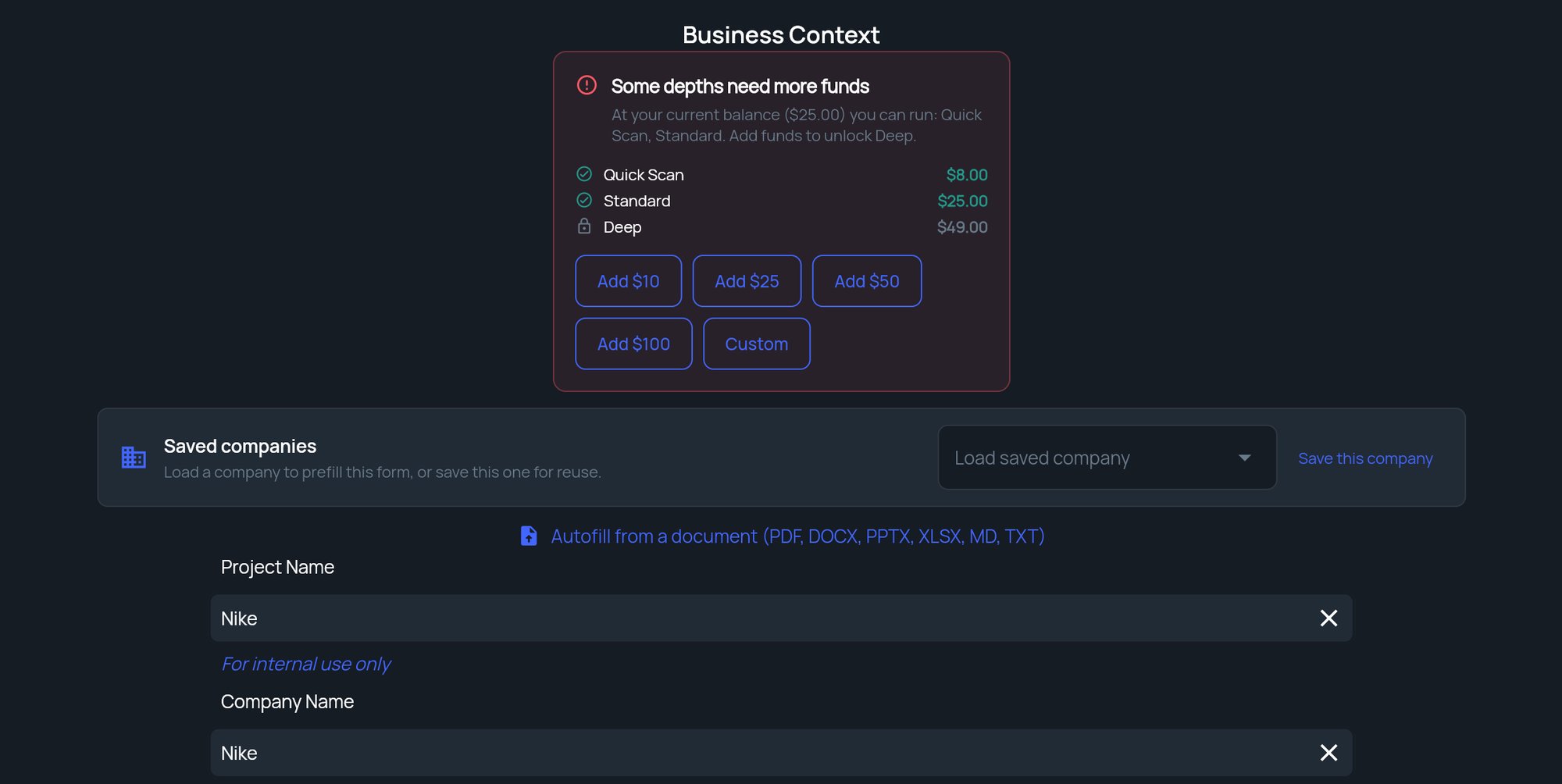
Below these, Framework Inputs (Optional) lists extra questions specific to the framework you picked. Click the heading to collapse or expand it.When you’re done, click Continue.
4
Generate
On the Generate step, click Generate Framework. Below the button, the app shows the processing time for the depth the framework will run at, for example Processing time is ~8 min. See Analysis depth and cost.A progress overlay shows while the analysis runs. When it finishes, the framework opens on its results page. See Work with framework results.
Fill the form faster
Load a saved company
The Saved companies card at the top of the Context step fills the form from a company you’ve saved before. Choose it from Load saved company. The project name stays as it is, because it’s specific to this run.- Save this company saves the details you’ve entered so you can reuse them. You’ll be asked for a name.
- Update saved company appears when a saved company is loaded. It writes your changes back to that saved company.
- The x next to the dropdown unlinks the saved company but keeps the fields as they are.
Autofill from a document
Click Autofill from a document (PDF, DOCX, PPTX, XLSX, MD, TXT), then drop a file on the upload area or click it to choose one. StratEngine shows Parsing text… while it reads the file, then fills in the fields it found, including the framework’s optional inputs. Review every field before you continue. Click Hide to collapse the upload area again.Save a draft
Once Project Name has text, a Save button appears at the top of the page. Click it to save your inputs as a draft without running the analysis. You’ll see Inputs saved successfully!Analysis depth and cost
How deep the analysis goes depends on your account:- Subscription plans: there’s no depth choice on this page. The framework runs at the deepest depth your plan includes. Free runs the shortest depth, so its results don’t include momentum or assumptions.
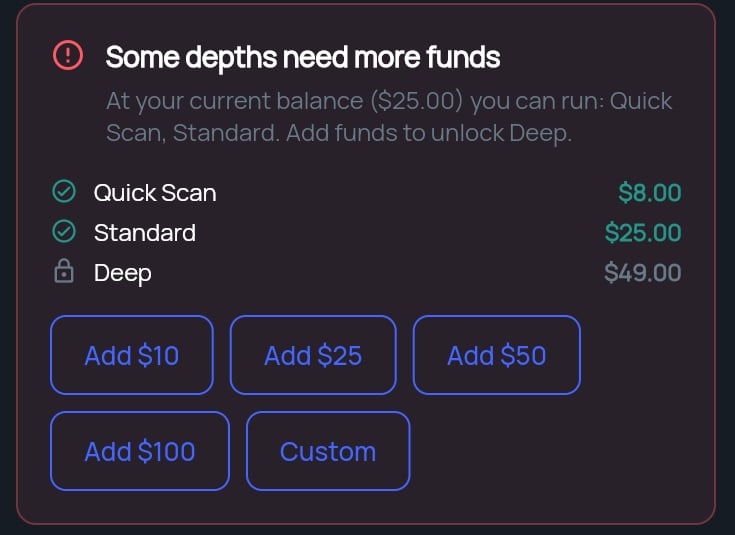
- Pay-as-you-go: the Generate step shows an Analysis depth panel with Quick Scan, Standard and Deep. A card under the options lists what the selected depth adds, followed by the Cost of the run and your Balance (or how many free analyses you have left). If your balance is too low, the panel says how much more you need and offers amounts to add.
See Analysis depth and Pay-as-you-go.